
Listed most recent to oldest
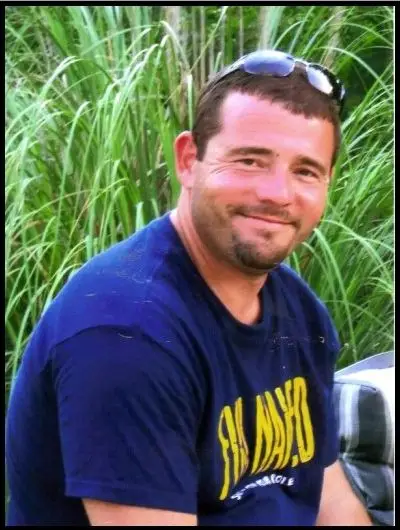
James David "Spanky" Stephens, Jr
Birth: March 9, 1971
Death: September 15, 2009
Obituary
No obituary found.
Burial: Sunset Memorial park, Midland City, Dale County, Alabama, USA
Criminal Details
The Dothan Eagle
Ebony Horton - Sep 16, 2010
View on DothanEagle.com
OZARK – A year-old tragedy that split a family across two sides of a Dale County courtroom ended Thursday with a man being found not guilty of his cousin’s death.
After more than three hours of deliberation, a jury found that 28-year-old Josh O’Neal Cook was not guilty of murder when he shot his cousin, 38-year-old James “Spanky” Stephens, on Sept. 14, 2009.
It was the second murder case in Dale County this year in which a jury returned a not guilty verdict when defense attorneys argued self defense.
Authorities said Cook shot and killed Stephens with a .22-caliber revolver on the night he came onto Cook’s property to protect Cook’s ex-wife Chloe Pugh, who authorities have said was Stephens’ girlfriend at the time.
Defense attorneys Robert Brogden and Jason Brogden argued Cook acted in self defense when he fired one warning shot as Stephens advanced toward him and then another shot that claimed Stephens’ life.
Stephens’ mother, Diane Hallford, said through tears that she didn’t know whether to be angry at Cook or to hug him.
“It’s been more like Spank was on trial, when we know the only reason he went there that night was to protect somebody else. But I know that if Spank was here and Josh (Cook) had shown any remorse or was the father he claims to be, that my son would have said not to send (Cook) to jail,” she said.
“It ain’t easy. Sometimes I still sit out and wait for Spank to pull up. He loved his momma, and we all loved him very much.”
Robert Brogden said Stephens risked his own life because Pugh told Stephens that Cook threatened her life and the life of her 3-year-old son on the night Stephens was killed.
The incident happened within two minutes of the Midland City Police Department, according to Brogden.
“Both Chloe Pugh and (Stephens) had opportunities where this would not have happened. She could have listened to her friend and left or called the police. He could have listened to his friend and not gone over there, or left when that first warning shot was fired,” Brogden said during closing arguments.
“If (the jury) found this man guilty, word would get out that a woman can sick her (boyfriend) on her husband, they can come to your house and you can’t do nothing about it.”
Dale County Assistant District Attorney Bill Filmore said Cook had other options besides killing Stephens on the night of the incident.
Filmore said he believed the self-defense law defense attorneys applied was not intended for such a case.
“I don’t think the Legislature’s intent (on self defense) was that for anybody who walks in your yard, you have the right to just blow them away. How about jumping in his truck and taking a right turn?” Filmore asked in closing arguments.
“What about where he shot him at in the center mass? Were there other options there? … Josh Cook committed murder. Common sense tells you that.”
Cook’s mother, Tressa Denton, said there were things everyone could have done different the night Stephens was killed.
“My son could have acted differently. If the shoe was on the other foot and I had lost him, I would be angry as well. It’s been a full year since we’ve seen our grandson. Everyone could have done things different,” she said.
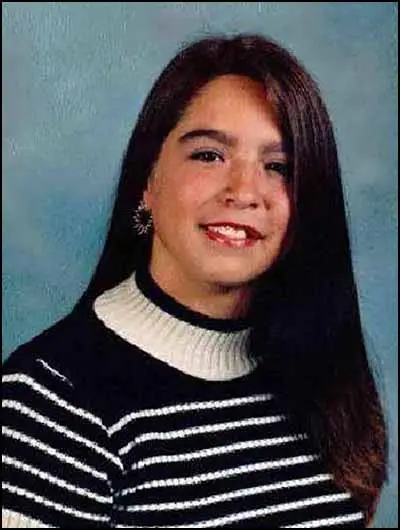
Kemberly Lorin Ramer
Birth: April 18, 1980
Missing: August 15, 1997
Obituary
Death status unknown.
Criminal Details
Facebook.com
@AlabamaLostnmissing
#Missing: Kemberly Lorin Ramer
NamUs MP # 4025
NCMEC number: 836649
Missing since: August 15, 1997
Missing from: #Opp, #Alabama #AL
#(Covington County)
CharleyProject.org
Date Unknown
Vital Statistics at Time of Disappearance
- Missing Since: August 15, 1997 from Opp, Alabama
- Classification: Endangered Missing
- Date Of Birth: May 18, 1980
- Age: 17 years old
- Height and Weight: 5'4, 130 pounds
- Distinguishing Characteristics: Caucasian female. Brown hair, brown eyes. Kemberly wore clear braces on her teeth at the time of her 1997 disappearance. She has thick eyebrows and her ears are pierced. Her nickname is Kem. Her shoe size is 6 1/2.
- Clothing/Jewelry Description: Possibly white t-shirt with a brightly colored design on the front and the words "New Orleans" underneath, gray cut-off sweatpants, a gold bracelet, a gold necklace and a gold chain ankle bracelet.
Details of Disappearance
Kemberly attended a softball game on the night of August 15, 1997, then visited her boyfriend and other friends. She left her boyfriend's house sometime between 11:00 and 11:45 p.m. to return to her father's residence, which was about a five-minute drive away, and her car pulled into the driveway at around midnight. She has never been seen again, and none of her shoes disappeared with her. She vanished four days before she was due to start her senior year of high school. She planned to attend the University of South Alabama and major in physical therapy.
Kemberly's parents reported her as a missing person at 9:00 a.m. on August 17, two days after she was last seen. There was evidence of a struggle inside her bedroom and it's possible that she was been taken against her will. Her personal belongings were left behind at the home, including her eyeglasses, her contacts, jewelry, and money. Foul play is suspected by both the police and Kemberly's family. Her boyfriend and all her family members have been ruled out as suspects.
Nine months after Kemberly's disappearance, on her eighteenth birthday, investigators searched a rural Walton County lake. They were acting on two tips that her body had been dumped there. The search lasted three days and turned up no clues relating to Kemberly's case. In 2001, a non-profit group in Texas searched Baptism Hole with cadaver dogs and got several hits. They dug up an engine block with a rope tied to it, but had to leave the site before they could excavate it completely. The next day the FBI brought in its own dogs and the animals gave no indication of smelling human remains, so there were no more searches conducted in that area.
In September 2006, investigators searched a sinkhole near Ponce de Leon, Florida for Kemberly's remains after receiving an anonymous tip directing them to that location. The search turned up no evidence and Kemberly's case remains unsolved.
Investigating Agency
If you have any information concerning this case, please contact:
Opp Police Department
334-493-4511
OR
Federal Bureau Of Investigation
202-324-3000
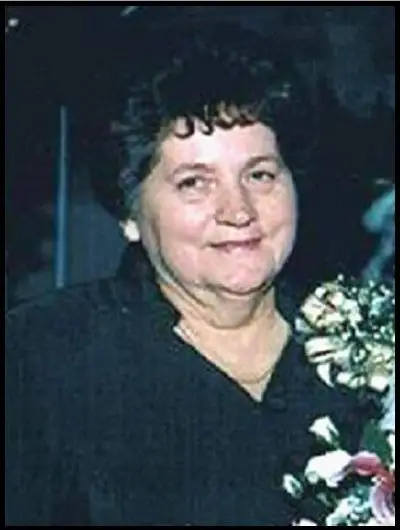
Mary Olivia Green Spivey
Birth: March 14, 1934
Death: June 24, 1997
Obituary
No obituary found.
Husband: Douglas Avery Spivey
Son: Douglas Ray Spivey
Father: James Warren Green
Mother: Verna Mae Grice Green
Siblings: James Nathan Green
Burial: Columbia Cemetery, Columbia, Houston County, Alabama, USA
Criminal Details
No criminal details found.
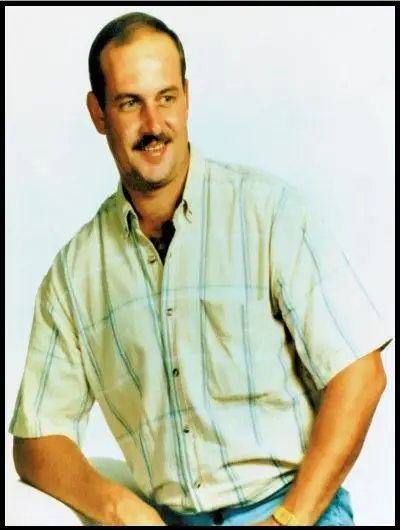
Timothy John Kaye
Birth: August 7, 1958
Death: May 4, 1997
Obituary
No obituary found.
Father: John Kaye, Jr.
Burial: Crestlawn Cemetery, Avon, Houston County, Alabama, USA, Plot: The Christus Garden
Criminal Details
blog.AL.com
The Associated Press - May 29, 2009
MONTGOMERY -- The Alabama Supreme Court has upheld the death sentence for a kidnapping and murder in Houston County.
The court issued a 7-0 ruling today rejecting Michael Jerome Lewis' challenge to his death sentence for his capital murder conviction.
Lewis was convicted in the beating and shooting death of Timothy John Kaye at a mobile home in Houston County on April 25, 1997.
In his appeal, Lewis said his trial judge erred when he didn't instruct the jury about "residual doubt" in the penalty phase of the trial. Residual doubt is the absence of absolute certainty of guilt. The Supreme Court said residual doubt is not a mitigating circumstance in capital murder cases.
The Dothan Eagle
Lance Griffin - Aug 4, 2014
The attorney for a man convicted of capital murder and sentenced to death 11 years ago believes prison inmates could have information that will help him land a new trial.
Ab Powell, attorney for Michael Jerome Lewis, asked a local judge on Monday to allow the testimony of three inmates currently housed at various prisons around the state.
Lewis is seeking a new trial for several reasons, including ineffective counsel during the trial. An evidentiary hearing to determine if a new trial is warranted is set for Aug. 19 in front of Judge PB McLaughlin and Lewis is seeking those inmates’ testimony during that hearing.
Lewis was convicted in 2003 for the 1997 murder of Timothy John Kaye. Another man, James Anthony Free, was also convicted and sentenced to death. According to court records, Lewis, Free, Kaye and another person went to Lewis’s mobile home in Houston County. Free and Kaye became involved in an altercation, which resulted in Free beating Kaye in the head with his fist and a beer bottle.
At some point, Lewis also became involved in the altercation. Free and Lewis then started arguing over who would shoot Kaye. The badly-beaten Kaye was subsequently shot twice in the head. Kaye was placed in the back of his pick-up truck and taken across the state line into Holmes County, Florida. Lewis and Free then threw Kaye’s body from a bridge on Highway 2 into the Choctawhatchee River. Lewis and Free later returned to Houston County, in Kaye’s truck, drove the truck to a field alongside Sonny Mixon Road, and set it on fire.
Powell argued Monday that Free told several inmates he acted alone in the murder.
State prosecutor Jon Hayden argued the motion to allow the inmates to testify during the Aug. 19 evidentiary hearing should not be granted because the testimony amounts to hearsay.
McLaughlin is expected to rule today.
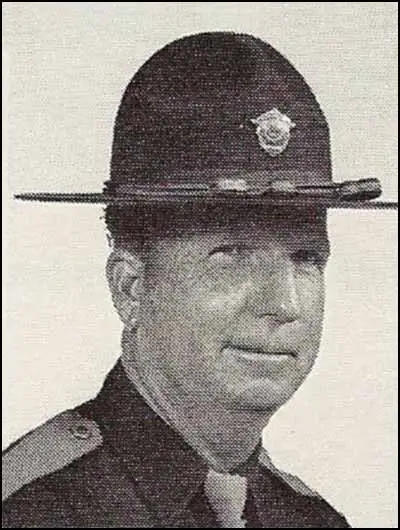
Max Decolamer King
Birth: October 21, 1929
Death: January 26, 1997
Obituary
No obituary found.
Wife: Johneen Bludsworth King
Father: James W. King
Mothern: Mittie H. Gissendanner King
Brother: James Elton King
Burial: Pinckard Cemetery, Pinckard, Dale County, Alabama, USA
Criminal Details
caselaw.FindLaw.com
August 26, 2005
On Sunday, January 26, 1997, during the evening hours, Max D. King and Johneen King were murdered at their home, located at Route 2, Box 4, Midland City, Alabama.
On Sunday, January 26, 1997, the Kings were at their home on Highway 134, between Midland City and Pinckard, Alabama. Their motor vehicles were parked in their driveway and in their garage or carport. Their lights were on. It was obvious to anyone that the Kings were at home and awake. Their dwelling was occupied.
The defendant and Calvin Butler approached the Kings' home and knocked on the door. The defendant and Calvin Butler were under the guise that they were looking for a particular person or house. When Mr. King responded to the knock at the door, the defendant and his associate or accomplice, Calvin Butler, forced their way into the home. Mr. King was forced to lay down on the den floor in front of the television and was shot through the top of the head with a nine millimeter pistol. According to the autopsy reports and the testimony of Dr. Parades, the forensic medical examiner, the bullet entered the top of the head, passed through the brain, then exited the throat and neck area.
The defendant then escorted Mrs. King to the kitchen area in search of her purse and money and shot Mrs. King in the top of the left side of the head.
Both Mr. and Mrs. King were shot with a 9mm pistol at close range one time into the head.
The defendant and his accomplice or associate, Calvin Butler, took or stole Mr. King's wallet, a .357 revolver, a 30/30 rifle, Mrs. King's purse and contents, a toolbox and a safe which contained several hundred dollars during the course of the burglary, robbery and double murder.
The State's evidence also showed that the police investigation focused on Wimberly after Mary Spivey was murdered in June 1997 in Dale County and Wimberly was arrested and charged with her murder. Forensic testing of the bullets that killed Spivey matched the bullets that killed the Kings. Calvin Butler, Wimberly's codefendant in the Dale County murders, pleaded guilty to five counts of capital murder for his involvement in the murders. Butler testified at Wimberly's trial that Wimberly shot and killed both Max King and Johneen King.
The Southeast Sun
Sarah Gilbert - Apr. 11, 2001
A Dothan man convicted in the slaying of a Midland City couple is scheduled to be retried in Dale County Circuit Court next week. Shaber Chamon (Hulk) Wimberly is scheduled to go on trial for the Jan. 26, 1997, slayings of retired state trooper Max King and his wife, Johneen. Mrs. King was the daughter of John and Earleen Bludsworth of Clayhatchee. Wimberly was convicted of the killings on April 24, 1998, and sentenced to death, but the conviction was overturned by a state appeals court in May 1999 on an age-rrelated technicality. At the time, Wimberly was the youngest death row inmate in the nation.
A Dothan man convicted in the slaying of a Midland City couple is scheduled to be retried in Dale County Circuit Court next week.
Shaber Chamon (Hulk) Wimberly is scheduled to go on trial for the Jan. 26, 1997, slayings of retired state trooper Max King and his wife, Johneen. Mrs. King was the daughter of John and Earleen Bludsworth of Clayhatchee. Wimberly was convicted of the killings on April 24, 1998, and sentenced to death, but the conviction was overturned by a state appeals court in May 1999 on an age-rrelated technicality. At the time, Wimberly was the youngest death row inmate in the nation.
The Court of Criminal Appeals based its ruling for a new trial on the premise that when investigators arrested Wimberly, then 17 years old, he was interrogated without being properly informed of his right to have his parent or guardian present.
The appeals court also said a statement by King's stepdaughter which was read to jurors during the sentencing hearing was improper.
After the conviction was overturned, the Alabama Attorney General's office petitioned the appeals court for a rehearing on the ruling, but the petition was rejected. The case was then appealed to the Alabama Supreme Court, which agreed that Wimberly should have been allowed his juvenile rights to have his parents or guardian present during the interview with police. The justices said 16- and 17-year-old killers must be treated the same as other juvenile offenders. Justice Jean Brown disagreed, and wrote a dissenting report, saying that the traditional Miranda warnings were sufficient. Brown referred to the statute approved by the state Legislature, which states that any person who is 16 years old at the time of an incident is not subject to the jurisdiction of juvenile court if they have committed a capital offense, a Class A felony, committed a felony using a deadly weapon, and a felony which caused death or serious injury.
Wimberly was connected to the Midland City slayings after bullet casings showed the same 9mm gun used to kill Mary Spivey, 63, a longtime Columbia restaurant owner, was also used to kill the Kings. Spivey was killed during a robbery at her home several months after the Kings were murdered. Wimberly was found guilty of killing Mary Spivey by a Dothan jury in January 2000.
Testimonials
April 6, 2014:Max and Johneen were good people who were well loved in their community (Midland City). They were both known for helping others.
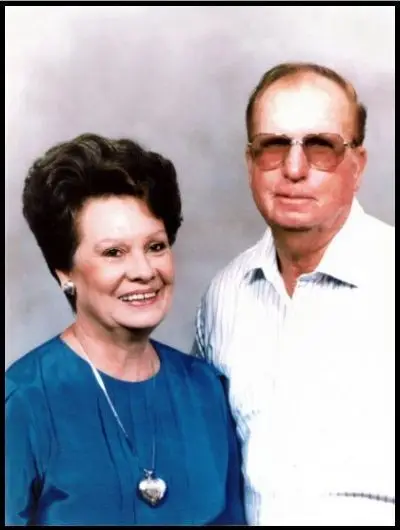
Johneen Bludsworth King
Birth: April 2, 1943
Death: January 26, 1997
Obituary
No obituary found.
Husband: Max Decolamer King
Burial: Pinckard Cemetery, Pinckard, Dale County, Alabama, USA
Criminal Details
caselaw.FindLaw.com
August 26, 2005
On Sunday, January 26, 1997, during the evening hours, Max D. King and Johneen King were murdered at their home, located at Route 2, Box 4, Midland City, Alabama.
On Sunday, January 26, 1997, the Kings were at their home on Highway 134, between Midland City and Pinckard, Alabama. Their motor vehicles were parked in their driveway and in their garage or carport. Their lights were on. It was obvious to anyone that the Kings were at home and awake. Their dwelling was occupied.
The defendant and Calvin Butler approached the Kings' home and knocked on the door. The defendant and Calvin Butler were under the guise that they were looking for a particular person or house. When Mr. King responded to the knock at the door, the defendant and his associate or accomplice, Calvin Butler, forced their way into the home. Mr. King was forced to lay down on the den floor in front of the television and was shot through the top of the head with a nine millimeter pistol. According to the autopsy reports and the testimony of Dr. Parades, the forensic medical examiner, the bullet entered the top of the head, passed through the brain, then exited the throat and neck area.
The defendant then escorted Mrs. King to the kitchen area in search of her purse and money and shot Mrs. King in the top of the left side of the head.
Both Mr. and Mrs. King were shot with a 9mm pistol at close range one time into the head.
The defendant and his accomplice or associate, Calvin Butler, took or stole Mr. King's wallet, a .357 revolver, a 30/30 rifle, Mrs. King's purse and contents, a toolbox and a safe which contained several hundred dollars during the course of the burglary, robbery and double murder.
The State's evidence also showed that the police investigation focused on Wimberly after Mary Spivey was murdered in June 1997 in Dale County and Wimberly was arrested and charged with her murder. Forensic testing of the bullets that killed Spivey matched the bullets that killed the Kings. Calvin Butler, Wimberly's codefendant in the Dale County murders, pleaded guilty to five counts of capital murder for his involvement in the murders. Butler testified at Wimberly's trial that Wimberly shot and killed both Max King and Johneen King.
The Southeast Sun
Sarah Gilbert - Apr. 11, 2001
A Dothan man convicted in the slaying of a Midland City couple is scheduled to be retried in Dale County Circuit Court next week. Shaber Chamon (Hulk) Wimberly is scheduled to go on trial for the Jan. 26, 1997, slayings of retired state trooper Max King and his wife, Johneen. Mrs. King was the daughter of John and Earleen Bludsworth of Clayhatchee. Wimberly was convicted of the killings on April 24, 1998, and sentenced to death, but the conviction was overturned by a state appeals court in May 1999 on an age-rrelated technicality. At the time, Wimberly was the youngest death row inmate in the nation.
A Dothan man convicted in the slaying of a Midland City couple is scheduled to be retried in Dale County Circuit Court next week.
Shaber Chamon (Hulk) Wimberly is scheduled to go on trial for the Jan. 26, 1997, slayings of retired state trooper Max King and his wife, Johneen. Mrs. King was the daughter of John and Earleen Bludsworth of Clayhatchee. Wimberly was convicted of the killings on April 24, 1998, and sentenced to death, but the conviction was overturned by a state appeals court in May 1999 on an age-rrelated technicality. At the time, Wimberly was the youngest death row inmate in the nation.
The Court of Criminal Appeals based its ruling for a new trial on the premise that when investigators arrested Wimberly, then 17 years old, he was interrogated without being properly informed of his right to have his parent or guardian present.
The appeals court also said a statement by King's stepdaughter which was read to jurors during the sentencing hearing was improper.
After the conviction was overturned, the Alabama Attorney General's office petitioned the appeals court for a rehearing on the ruling, but the petition was rejected. The case was then appealed to the Alabama Supreme Court, which agreed that Wimberly should have been allowed his juvenile rights to have his parents or guardian present during the interview with police. The justices said 16- and 17-year-old killers must be treated the same as other juvenile offenders. Justice Jean Brown disagreed, and wrote a dissenting report, saying that the traditional Miranda warnings were sufficient. Brown referred to the statute approved by the state Legislature, which states that any person who is 16 years old at the time of an incident is not subject to the jurisdiction of juvenile court if they have committed a capital offense, a Class A felony, committed a felony using a deadly weapon, and a felony which caused death or serious injury.
Wimberly was connected to the Midland City slayings after bullet casings showed the same 9mm gun used to kill Mary Spivey, 63, a longtime Columbia restaurant owner, was also used to kill the Kings. Spivey was killed during a robbery at her home several months after the Kings were murdered. Wimberly was found guilty of killing Mary Spivey by a Dothan jury in January 2000.
Testimonials
April 6, 2014:Max and Johneen were good people who were well loved in their community (Midland City). They were both known for helping others.
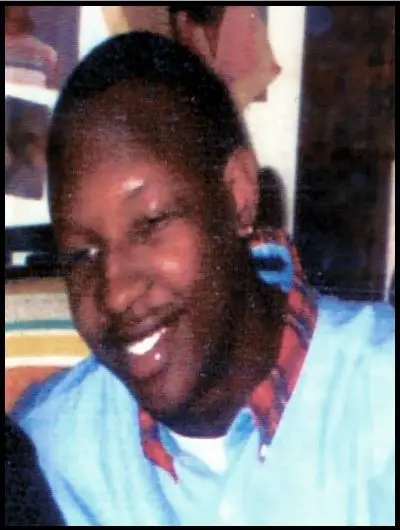
Gregory Lamont Oliver
Birth: July 21, 1972
Death: June 30, 1996
Obituary
No obituary found.
Burial: Saint Paul Baptist Church Cemetery Houston County, Alabama, USA
Criminal Details
No criminal details found.
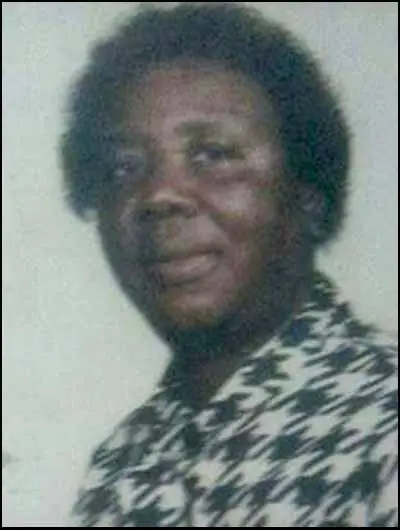
Ruthie Mae Jackson
Birth: December 25, 1923
Death: April 7, 1996
Obituary
No obituary found.
Criminal Details
DothanFirst.com
Valencia Jones - January 9, 2016
Dothan Police Lt. Will Glover, the supervisor of the criminal investigation division (CID), said the inquiry into what happened to Ruthie Mae Jackson remains open. He said investigators in the violent crimes unit periodically review old unsolved cases, such as the Jackson one, checking to see if there’s any evidence that can be analyzed with more up to date technology.
According to an earlier Dothan Eagle report, Ruthie Mae Jackson was fatally stabbed at least a dozen times about her body and neck during the early morning hours of Easter Sunday, then April 7, 1996, at her 403 E. Adams St. home.
Glover said investigators have ruled out robbery as a motive in the Jackson homicide.
“We don’t close unsolved homicides,” Glover said. “Any lead that’s developed or called in we follow up on it immediately.”
randyroughton.blogspot.com
Randy Roughton - May 22, 2014
Mrs. Jackson, 73, was preparing her Easter Sunday meal in her 1403 E. Adams St., home on April 7, 1996 and had planned to join her daughter Shirley for worship services. Shirley Jackson was waiting on her mother to call her that day, but says "My mama hasn't called me yet."
The Jacksons - Bobby, Early, James (and wife Patricia), Sam Selma and Shirley - live together in a cluster of houses in the Helen community where they were reared by Mrs. Jackson and her former husband Sam. But holidays have not been the same since the murder.
Testimonials
July 28, 2017:Ruthie Mae Jackson (Mom Mae) was a very Loving, kind,and caring woman of God who cherrished life and committed herself to helping others. A Mother of 6. Sam Jackson Jr, Selma Lemon, Early Jackson, James Jackson, and Bobby Joe Jackson all of Headland, Al. We all pray to live to see the day that justice will be served. A woman who was taken away from her family who truly loved and cared for her. She will never be forgotten and May she Rest in Heavenly Peace.
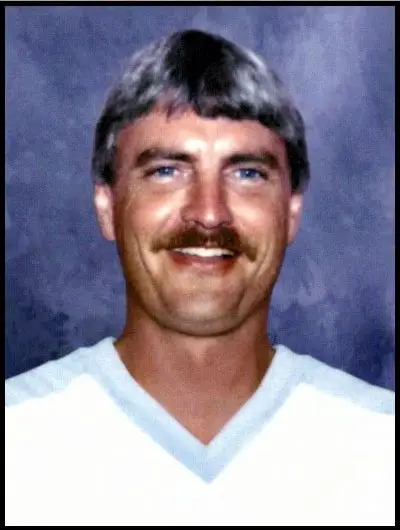
Terry Clenney
Birth: December 16, 1954
Death: August 15, 1995
Obituary
Parents: Carl Richard Clenney (1924 - 2011) and Christine Robinson Clenney (1935 - )
Burial: Abbeville Memorial Cemetery , Abbeville, Henry County, Alabama, USA
Criminal Details
No Criminal Details.

Patricia Ann Bodak Whittle
Birth: May 17, 1957
Death: May 20, 1994
Obituary
No obituary found.
Husband: Harold Daniel Whittle
Children: Amber and Lisa
No criminal information found.
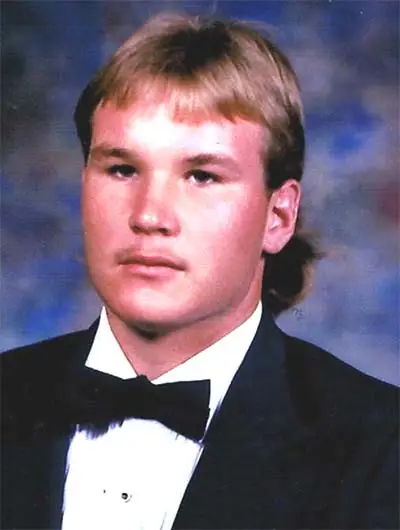
Timothy “Tim” Bolin
Birth: circa 1969
Death: October 24, 1993
No Criminal Details found
Criminal Details
NEWSSOURCE
REPORTER - PUBLISHDATE
ARTICLETITLE
ARTICLETEXT
Source: View SOURCENAME Article
Testimonials
Lanova Smith
Birth: April 15, 1973
Death: May 24, 1993
Obituary
No obituary found.
Children: Michael Smith and Candance
Mother: Jasmine Gould
Siblings: Lanora Smith and Liz Golay
Attended Enterprise High School (1993)
Criminal Details
No criminal details found
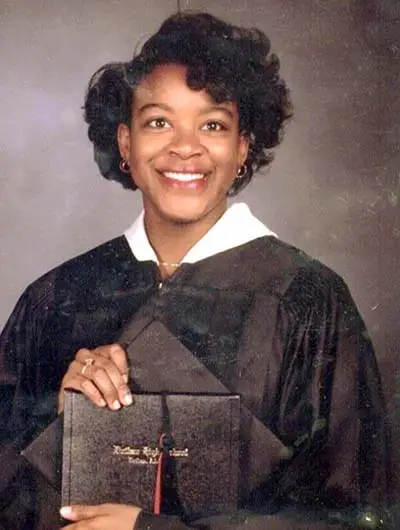
Gwendolyn D. Brock
Birth: December 31, 1970
Death: November 25, 1990
Criminal Details
DothanEagle.com
Staff Reports - Jan 10, 2017 Updated Feb 19, 2019
Parole denied for man convicted in 1990 Houston County murder
A man found living in New Orleans 10 years after killing a woman outside a Houston County nightclub was denied parole on Tuesday morning.
Vincent Lampkin, now 50 years old, had his case presented before the Alabama Board of Pardons and Paroles to request early release from prison. He is serving a 99-year sentence for the 1990 shooting death of Gwendolyn Brock, who he confronted on Nov. 25, 1990, in the parking lot of the 500 Club in the Bay Springs Community as she was trying to leave. Lampkin shot Brock in the face with a .380-caliber pistol after asking her to return a ring he had given her. Brock later died at Flowers Hospital from a single gunshot wound to the head.
Lampkin eluded police capture for almost a decade, working as a barber in New Orleans under the name of Leon David Joseph. He was arrested on an aggravated assault charge against his wife in April 2001. Fingerprints obtained by police making that arrest identified him by his real name and he was arrested again in May 2001 and charged with Brock’s murder.
During his trial, Lampkin testified he was trying to hand the gun over to Brock when it went off accidentally. However, Chris White, who was with Brock that night, testified that tensions between Brock and Lampkin had been building for several months after she broke off a two-year relationship with Lampkin in the fall of 1990. White said Lampkin confronted him and Brock at the nightclub and later order White to get out of Brock's car.
Lampkin was convicted in January 2003 and sentenced to serve 99 years in prison.
Outgoing District Attorney Doug Valeska and incoming District Attorney Pat Jones both appeared before the parole board to protest early release for Lampkin.
Source: View DothanEagle.com Article
Testimonials

Kristy Lee Wells
Birth: September 15, 1971
Death: September 1, 1990
Obituary
No obituary found.
Burial: Shelby Garden of Rest, Shelby, Shelby County, Alabama, USA
No criminal information found.
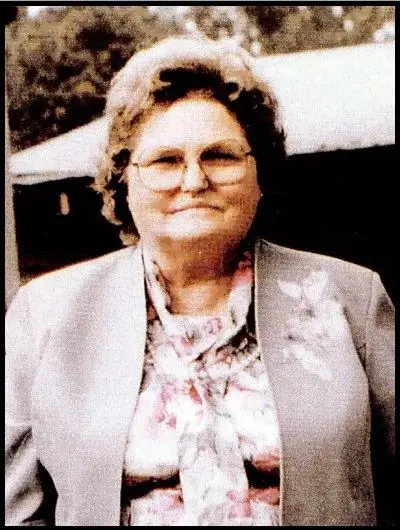
Ella Foy Cook Riley
Birth: December 26, 1921
Death: May 21, 1990
Obituary
Husband: Calvin W. Riley
Burial: Pleasant Grove Cemetery, Abbeville, Henry County, Alabama, USA
Criminal Details
The Dothan Eagle
Matt Elofson - Jul. 28, 2015
A man convicted of robbery in connection to the murder of an Abbeville woman in 1990 will spend at least five more years in prison after his parole was denied Tuesday.
Houston County District Attorney Doug Valeska said the Alabama Board of Pardons and Paroles denied the parole request by Olin Grimsley.
Valeska said a jury convicted the 65-year-old Grimsley of felony first-degree armed robbery in April 1994.
“He’s serving a life sentence and they denied his request for parole for another five years,” Valeska said.
Grimsley was convicted of robbery for his role in the robbery/murder of Ella Foy Riley on May 21, 1990.
A cigarette butt found at the crime scene tied Grimsley to the crime. No DNA testing was available at the time, but blood-type testing matched Grimsley’s. He was convicted of robbery and sentenced to life in prison.
Valeska attended the hearing to protest any possibility for parole, along with Riley’s daughter Pat Jones and some other relatives and representatives of VOCAL (Victims of Crime And Leniency).
Investigators also charged Willie McNair with capital murder. He was later convicted, sentenced to death and executed in 2009.
Birmingham News
Tom Gordon - May 14, 2009
Willie McNair, convicted of robbing, strangling and stabbing to death a southeast Alabama woman for whom he did yard work, died by lethal injection tonight as his victim's six children watched.
McNair, 44, did not look at victim Ella Foy Riley's children. He also declined to pray with the prison chaplain, made no final public statement and spent his last moments staring at the ceiling as the injection began at 6 p.m. He was pronounced dead at 6:17 p.m. by Alabama Corrections officials.
Pat Jones and her brothers Calvin, Don, John, Bobby and Wayne Riley wore buttons with their mother's photograph for the execution. The buttons said "You are not forgotten." Wayne Riley, the youngest of the sons, issued a statement afterward: "I thank God for keeping myself, my four brothers and my sister alive and in good health so that we were able to see justice finally done. I ask that you pray for my family in the coming days and for the Willie McNair family, too, for they ... have suffered for what he has done."
Wayne Riley also said: "I can forgive Willie McNair for what he did because he paid the price with his life." Later the six children gathered with other family members for a candle light vigil. Participating was District Attorney Doug Valeska, who prosecuted McNair.
Earlier in the day, the U.S. Supreme Court had turned down his McNair's final sentence appeal.
Willie McNair became the fourth person executed by the state of Alabama this year. The Abbeville man had been on Death Row since 1991 for the May 21, 1990, slaying of Ella Foy Riley. Her daughter, Jones, found her mother stabbed and strangled in the kitchen of her Abbeville home. McNair had done yardwork for Riley in the past, and other members of his family had done work for her as well.
According to a case summary, McNair and a friend, Olin Grimsley, had been doing cocaine, wanted money to get some more, and had asked Riley for $20. She turned them down, and was attacked while she was getting McNair a drink of water. According to the state's filing in the case, McNair then took Riley's purse from the kitchen counter and he and Grimsley left the house. The next morning, after Riley's body was found, McNair admitted killing her when questioned by a sheriff's deputy.
The Riley children were able to witness the execution because Gov. Bob Riley, no relation to the victim, had signed into law a bill allowing up to six members of crime victim's family to watch the perpetrator's execution. Before today's signing, Alabama law allowed only two witnesses for the victim, and only two for person to be executed.
Jones said she had written McNair a few months ago, and that in his reply, he had expressed remorse for her mother's death. Carolyn Glanton, McNair's youngest sister, said the family wanted her brother, whom they called "Chubby," to be remembered as a "happy and lovable person. "Chubby has a real good heart," Glanton said before her brother died. "If anybody . . . really knew him, they'd know how good a person he is."
McNair turned down breakfast this morning and limited himself to only sodas during the day. In his will, McNair left a check for $1.11 to one of his attorneys, Randy Susskind. McNair also left several of his belongings to fellow Death Row inmates. He gave a television to Robin Myers; a radio and headphones to Michael Ervin; a Bible to Earl McGahee; and a pair of white Nikes tennis shoes to Robert Ingram. McNair has had eight visitors during the day, including two of sisters and two of his attorneys.
Susskind and Donald Blocker, McNair's spiritual adviser, are the only two witnesses he has requested to watch his execution this evening.
McNair was the fourth Death Row inmate to be executed in Alabama this year. Another inmate, Jack Trawick, is scheduled to die on June 11 for the murder of Stephanie Gach in Birmingham.

Marilyn Kay Mitchell
Birth: June 13, 1967
Death: May 15, 1990
Obituary
No obituary found.
Burial: Woodlawn Memorial Gardens, Ozark, Dale County, Alabama, USA
Criminal Details
The Dothan Eagle
Lance Griffin - Apr 26, 2012
A federal judge has denied the appeal of a death row inmate convicted of murder in the 1990 death of Dothan resident Marilyn Mitchell.
U.S. District Judge Mark E. Fuller denied the petition for a writ of habeas corpus from Artez Hammonds, convicted in 1997 of the brutal rape and murder of Mitchell. Hammonds exhausted various appeals in the state court system before attorneys filed the petition in federal court on his behalf. It took almost seven years for the appeal to work its way through the court system.
Mitchell was found dead in her Dothan townhouse on May 15, 1990, not long after graduating from the University of Alabama School of Nursing. The case remained unsolved until 1996 when the Alabama Department of Forensic Sciences conducted DNA testing on samples recovered at the crime scene. The DNA testing resulted in a match to Hammonds, who was already serving a 20-year sentence at Holman Prison for attempted murder in an unrelated case. Hammonds was charged with capital murder and convicted by a Houston County jury in 1997. He was sentenced to death.
Attorneys for Hammonds argued that his conviction and/or death sentence should be overturned for numerous reasons. Attorneys offered 25 separate examples of what they believed were incidents of ineffective counsel during Hammonds’ trial as well as his initial appeal.
Fuller declined to consider several of the examples because attorneys had failed to bring up the incidents in earlier appeals. He ruled the remaining examples did not have merit.
“That Hammonds’ lawyers had little evidence to work with hardly makes their efforts unsatisfactory,” Fuller wrote in his 100-page opinion and order. “Indeed, the overwhelming evidence of his guilt prejudiced Hammonds, not his attorneys’ performance.”
Hammonds’ attorneys also argued that Hammonds did not receive a fair trial because District Attorney Doug Valeska made a reference to Hammonds’ decision not to testify during the trial, which is improper. Trial judge Larry Anderson instructed the jury to disregard the statement and Fuller agreed with the lower appeals court that the statement did not prejudice the jury to the point of causing a mistrial.
Hammonds’ attorneys further argued that his trial lawyers could have argued mitigating factors during the penalty phase of the trial that could have kept a jury from recommending the death penalty.
Fuller disagreed.
“(Hammonds) raped and viciously stabbed to death a woman much smaller than he in a brutal, senseless and planned act of violence. Under these facts, this court can not say that had counsel presented more mitigation evidence, or better prepared the witnesses that testified, there would have been a reasonable probability that consideration of these facts would have led the jury to a different result,” Fuller wrote.
Hammonds can appeal Fuller’s ruling to the 11th Circuit Court of Appeals. If the 11th Circuit denies the appeal, he can continue the appeal to the U.S. Supreme Court.
Ken Curtis - Jul. 24, 2015
Dothan More than 25 years after a young woman was brutally murdered in her west Dothan home, the man convicted is still on death row.
“It’s not going to be long before Artez Hammonds gets what he deserves,” said Houston County District Attorney Doug Valeska who was the prosector. Hammonds’ case is pending in a federal appeals court and no execution date is set at this time.
Marilyn Mitchell, 22, was raped and stabbed 38 times May 15, 1990 as she was moving into a townhome in the Chapelwood subdivision. She had just graduated from the University of Alabama and would have begun work eight days later at a Dothan hospital. For six years, her case remain unsolved.
Hammonds, a year after Mitchell’s murder, was arrested for trying to kill another woman by stuffing her head into a toilet at a mini-storage warehouse in Dothan. “The only way she survived is to let her body go limp so Hammonds thought she was dead,” Valeska said. Hammonds was sent to prison for that crime.
A now-retired investigator assigned to the case said there are several reasons the case remained unsolved for six years. Bobby Sorrells claims Hammonds, who delivered furniture to Mitchell’s home the day before she was killed, was questioned early on but seemed to have an air-tight alibi. He also blames an FBI profile that said the man who killed Mitchell was likely white. Hammonds is black.
He also notes that a DNA match could not be obtained because inmates in Alabama, at the time, had DNA taken upon leaving prison, not when they arrived. Therefore, Sorrells said, there was no way to match the DNA until an arrest warrant was obtained after Hammonds became a suspect. He said that occurred after a forensics expert, in 1996, correctly surmised that the killer was black.